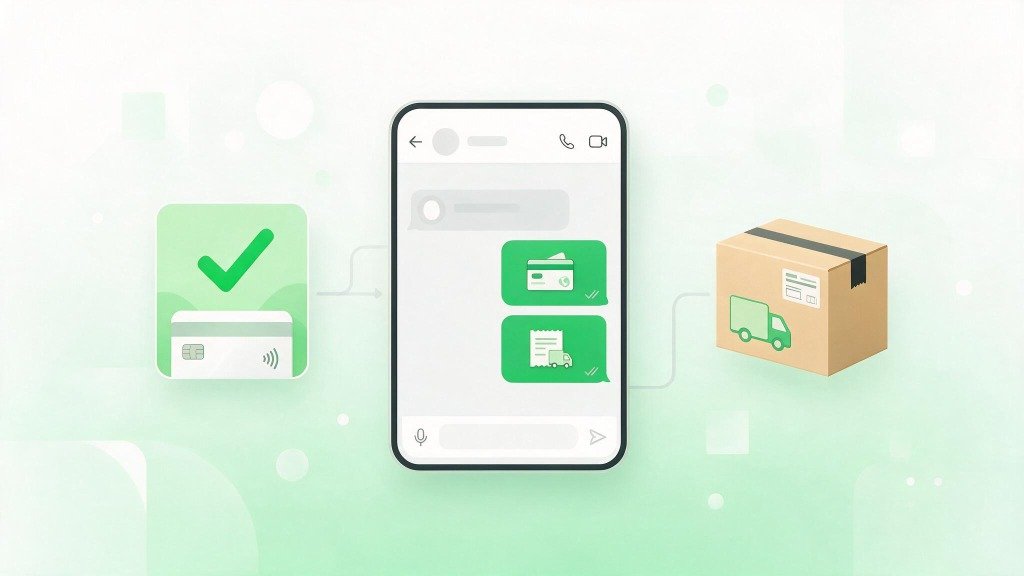
If you sell on WhatsApp today, you probably know the drill. A customer says "I want this." You send them a payment link. You wait. You follow up. They pay. Then you copy their address, log into your shipping dashboard, create an order, generate a label, and pray the courier picks it up on time.
That entire sequence is the tax you pay for not having a "proper" website. Behaf eliminates it.
The real problem with WhatsApp selling
Most WhatsApp sellers are running a business on chat and a spreadsheet. Payment links get lost in conversations. Shipping labels are created manually. Tracking updates go out when someone remembers to send them. And reconciling what came in versus what shipped versus what's still pending? That's a Friday night headache nobody signed up for.
If this sounds familiar, you're not alone. We wrote about why WhatsApp orders get lost in DMs and it's one of the most common pain points D2C sellers bring up.
The tools exist to fix all of this. PayU handles payments. Shiprocket handles shipping. But stitching them together yourself means either hiring a developer or spending weeks learning APIs you shouldn't have to touch.
Behaf does the stitching for you, and it happens inside WhatsApp.
How do payments work on Behaf?
When a customer picks a product through Behaf's WhatsApp store, they get a clean checkout experience right inside the chat. No redirecting to some random website. No "please pay to this UPI ID and send screenshot."
Behind the scenes, Behaf uses PayU's payment infrastructure. In practice, that means three things for sellers:
- Every payment method your customer expects. UPI, credit and debit cards, net banking, wallets, EMI options. PayU supports over 150 payment methods across India. Your customer in Kochi paying via Google Pay and your customer in Delhi using a credit card both go through the same system.
- Your money is protected. Behaf operates an escrow account structure with HDFC Bank. Customer payments land in a regulated HDFC escrow account, not in Behaf's own account. A trustee monitors funding and payment priority, then instructs the bank to settle funds to the seller. Behaf's 5% + ₹5 per order fee gets deducted before settlement. The rest goes straight to your bank account. This is the same escrow structure that established marketplaces use. Your money sits with HDFC, not with a startup.
- No chargebacks you didn't see coming. PayU's fraud detection runs on every transaction. Suspicious payments get flagged before they become your problem. For a WhatsApp seller doing 50 orders a day, that's protection you'd otherwise need an entire finance team to manage.
The seller doesn't configure any of this. No PayU dashboard login. No API keys. No webhook setup. You sign up on Behaf, connect your bank account, and payments work.
How does shipping work on Behaf?
Shipping is where WhatsApp sellers lose the most time. Behaf's Shiprocket integration makes it automatic. Payment clears, shipment gets created. No in-between.
- Order confirmed, shipment created. The moment a payment clears through PayU, Behaf creates a shipment on Shiprocket. No copy-pasting addresses. No manually entering product weights. The order data flows straight from the WhatsApp conversation into Shiprocket's system.
- The best courier gets picked automatically. Shiprocket aggregates 25+ courier partners, including Delhivery, BlueDart, Ecom Express, DTDC, and others. Their system compares rates and delivery speed for every pin code. A shipment going to a tier-2 city in Rajasthan might go through a different courier than one heading to Bengaluru. Behaf lets Shiprocket's algorithm handle that selection so the seller doesn't have to compare rates manually.
- 19,000+ pin codes covered. This is Shiprocket's domestic reach. For a D2C brand selling fashion from Thrissur to customers across India, that coverage matters. You're not limited to metros. Your WhatsApp store can serve a customer in Siliguri just as easily as one in Mumbai.
- COD is supported. Cash on delivery is still how a significant chunk of India shops online, especially for first-time buyers and customers in smaller cities. Behaf supports COD orders through Shiprocket, with COD remittance handled automatically. The seller doesn't chase courier companies for their cash collection.
- Tracking updates go to the customer automatically. Once a shipment is created, the customer gets tracking updates on WhatsApp. Dispatched, in transit, out for delivery, delivered. They don't need to ask "where's my order?" because the answer shows up in the same chat where they ordered.
What this looks like end to end
A customer messages your Behaf WhatsApp store at 10 PM asking about a cotton kurta. Behaf's AI assistant shows them options, answers their questions about fabric and sizing, and helps them pick one. They tap "Order" and get a payment screen inside WhatsApp. They pay ₹1,800 via UPI.
Within seconds: PayU confirms the payment. Behaf creates the order. Shiprocket generates a shipment with the optimal courier for that customer's pin code. The customer gets a confirmation message with an estimated delivery date. The seller sees all of this in their Behaf dashboard the next morning.
No manual steps. No missed orders. No 11 PM shipping label creation sessions.
Why this matters for D2C brands
Most D2C brands in India started on Instagram. They built an audience there, took orders via DMs, and handled fulfillment manually. That works at 10 orders a day. It breaks at 50.
The usual next step is building a Shopify store, which means monthly fees, a website to maintain, and marketing spend to drive traffic to a URL your Instagram followers may never visit. We've covered how Behaf compares to Shopify for Indian D2C brands if you want the full breakdown. Your customers are already on WhatsApp. They're already messaging you there. The conversion happens in the conversation.
Behaf keeps the sale where the conversation is. And by integrating PayU and Shiprocket directly into that flow, it removes the operational friction that makes WhatsApp selling hard to scale.
No monthly fees. No setup costs. You pay 5% + ₹5 per shipped order (plus GST), and that covers the payment processing, the shipping integration, and the AI assistant that handles your customers at 10 PM on a Tuesday.
The technical layer sellers never see
For anyone evaluating Behaf from a technical or partnership perspective, here's what's running under the hood:
PayU processes the payment. The funds settle into a regulated HDFC Bank escrow account with a formal trustee structure. The trustee monitors funding, manages payment priority, and instructs HDFC to release settlements to sellers. Commission deduction happens before settlement. This is the same escrow model that established Indian marketplaces operate on, with a scheduled commercial bank holding the funds rather than a payment intermediary.
On the shipping side, Shiprocket's API handles order creation, courier allocation, label generation, tracking, NDR (non-delivery report) management, and COD reconciliation. Behaf calls these APIs automatically based on order events. The seller's Behaf dashboard shows order status, but the orchestration between payment confirmation and shipment creation is fully automated.
Both integrations are production-grade. This isn't a prototype with Razorpay test keys and manual CSV uploads to a shipping portal. It's a system designed to handle hundreds of orders per seller per day without anyone touching a spreadsheet.
Getting started
Behaf is currently in private beta. The first 100 brands get a locked-in rate of 5% + ₹5 per order (the standard rate goes up to 10% after that). There are no setup fees, no monthly subscriptions, and no minimum order requirements.
You upload your products to the Behaf dashboard. It generates a WhatsApp store automatically. Customers browse, ask questions, and buy without leaving the chat. Payments and shipping happen in the background.
If you're a D2C brand doing 20+ orders a day on Instagram DMs and you're tired of the manual work, Behaf is worth a look.
Frequently asked questions
How does Behaf handle payments?
Behaf uses PayU as its payment gateway, supporting UPI, credit and debit cards, net banking, wallets, and EMI options (150+ payment methods). Customer funds are held in a regulated HDFC Bank escrow account with a trustee structure, then auto-settled to the seller's bank account after Behaf's commission (5% + ₹5 per order) is deducted.
How does Behaf handle shipping?
Behaf integrates with Shiprocket to automate shipping. When a payment clears, a shipment is created automatically with the optimal courier selected from 25+ partners (including Delhivery, BlueDart, Ecom Express, DTDC). Shiprocket covers 19,000+ pin codes across India. Tracking updates are sent to the customer on WhatsApp automatically.
Is my money safe with Behaf?
Yes. Customer payments go into a regulated HDFC Bank escrow account, not into Behaf's own account. A trustee monitors funding and payment priority, then instructs HDFC to settle funds to the seller. This is the same escrow structure used by established Indian marketplaces.
Does Behaf support Cash on Delivery (COD)?
Yes. Behaf supports COD orders through Shiprocket. COD remittance is handled automatically, so sellers don't need to chase courier companies for their cash collection.
What does Behaf cost?
Behaf charges 5% + ₹5 per shipped order (plus 18% GST). There are no setup fees, no monthly subscriptions, and no minimum order requirements. The first 100 brands get this rate locked in permanently; the standard rate rises to 10% after that.
Do I need a website to sell on Behaf?
No. You upload products to the Behaf dashboard, and it generates a WhatsApp store automatically. Customers browse, ask questions, and buy without leaving WhatsApp. No website, no coding, no app required. Read more about selling on WhatsApp without a website.
Ready to automate your WhatsApp orders?
No more manual payment links or shipping labels. Let Behaf, PayU, and Shiprocket handle the heavy lifting while you focus on growing your brand.
Set up your WhatsApp store